

Article: Fineliner and Resin Art: An Artist's Journey from Engineer to Creator
Fineliner and Resin Art: An Artist's Journey from Engineer to Creator
It took me a long time to say, without a trace of doubt, that I am an artist. Looking back, the hesitation was never really mine. It came from the doubt others attached to the label. For me, art was never something I was. It was something I needed to do, so it felt natural, until people started asking what I wanted to become as an adult, and expected a "serious" answer.
Even today, people ask how I started creating art when my career seems so far removed from it. Most of them meet me first as a project manager in industrial construction, so I can't help smiling at their surprise. Their question also takes me back to the time I gave the answers others wanted to hear, just to avoid the lectures that followed.
Whenever someone asks how the two fit together, I think about how I lost my way, and how creativity led me back. That answer is enough for me.
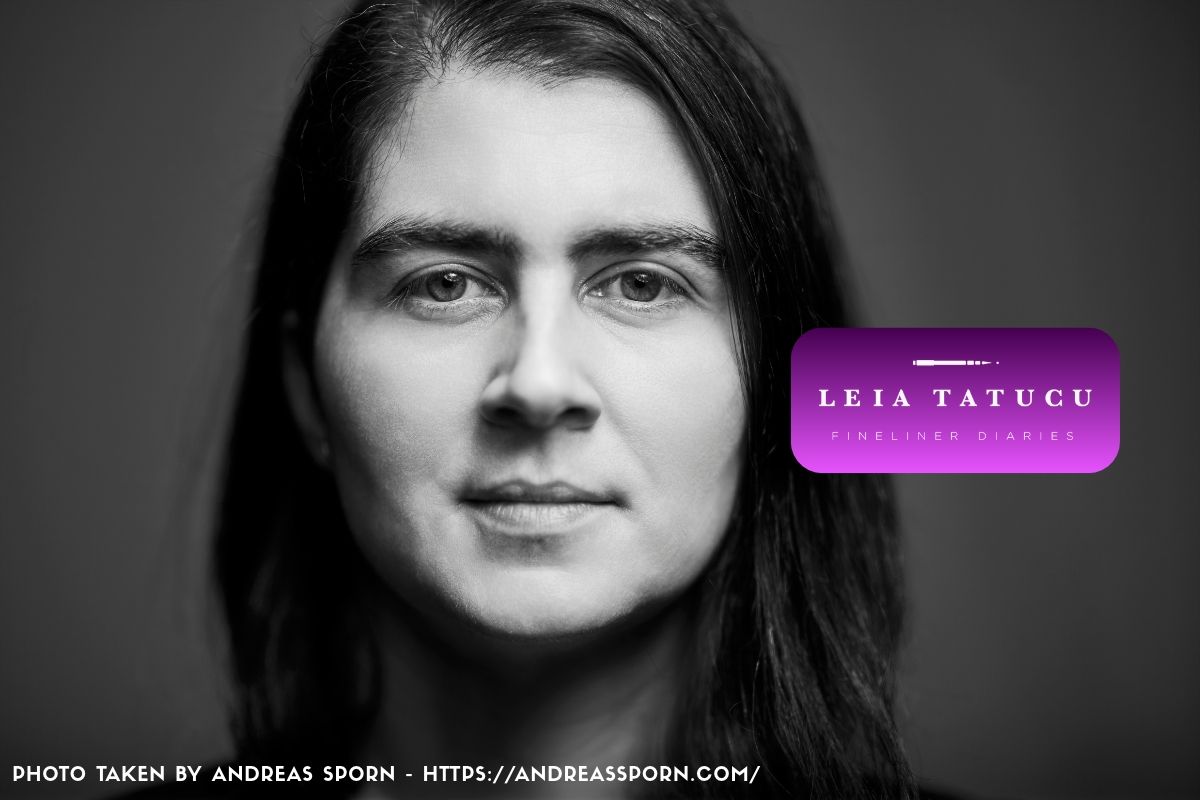
So, let me start from the beginning. My name is Leia. I'm a Romanian-born artist and trained civil engineer, living in Germany since 2013. I create fineliner drawings and mixed media collages, sometimes layered with resin. My style was shaped by a childhood steeped in self-taught craftsmanship, years of technical drawing, and a move abroad that pushed me out of my comfort zone and back toward art.
I don't think I chose fineliner pens and resin by accident. When I moved to Germany, I craved control and stability, and the fineliner gave me that. Over time, though, rigidity called for its opposite. Resin entered the picture and brought something I hadn't expected: softness, unpredictability, and balance. This is the story of how I got here.
Childhood Craftsmanship: The Roots of My Artistic Expression
My great-grandfather spent his career overseeing a steelworks floor — a world defined by machinery, heat, and industrial precision. But away from work, he painted in oils en plein air and carved wood into forms that existed purely for the joy of making them. No formal training. Just a quiet, persistent need to create.
Some of my clearest memories are of watching him paint in the courtyard, then trailing behind him into his basement workshop — the smell of fresh wood, the hum of cutting machines, and him in his coat, completely absorbed in his craft. Long before I ever picked up a fineliner pen, I was drawing at that very table, watching him work.
That tension between structure and self-expression became the throughline of my life, even before I had words for it.
The women in my family carried their own version of this. Embroidery, knitting, sewing, writing — their hands were always making something. Their work has always been, and continues to be, one of my greatest sources of inspiration and a quiet reminder of what dedication and creativity can produce.
From Technical Drawing to Emotion-Led Art
Technical drawing was part of my life for years. I measured, drafted, and corrected lines until they met exact specifications. It gave me a precision that still shows today in the clean, deliberate strokes of my fineliner work.
It also taught me restraint, and for a long time, that restraint held me back. Every piece felt like a technical exercise: correct, but cold. Without ever questioning it, I had come to believe that emotions had no place in my work, that they were a weakness to be kept out of the equation. It took me years to let that belief go.
Between 2010 and 2013, after graduating from university and while living and working in Timișoara, I found an unexpected release in Argentine tango. There was no blueprint and no fixed standard to correct against, just two people responding to the music and to each other in real time. Tango taught me that expression doesn't need a technical justification to be valid. It only needs to be felt.
That lesson didn't change how I made art overnight, but it planted a seed: maybe feelings, and not only formulas, should lead the work.
In 2013, I moved to Germany to continue my career as a civil engineer. Leaving behind my friends, my language, and everything familiar was more disorienting than I had expected. During that period of radical change, art became my anchor, something steady to return to while everything else shifted.
Fineliner and Resin Art: How My Signature Style Emerged
It was during those first years in Germany, while I was starting over and building a life from scratch, that I found the combination that would become my signature style: fineliner illustration layered with resin.
The fineliner gave me the precision I'd carried over from engineering. The resin gave me something I didn't know I needed: depth, unpredictability, and a physical texture no pen could ever replicate.
Resin doesn't always do what you tell it to. It pools. It catches the light differently from every angle. It asks you to accept a little imperfection in the final piece. Paired with the exacting lines of fineliner work, it created a balance that finally felt honest: structure and surrender, control and release. It was the same tension I had explored through dance before moving abroad.
Soon I was experimenting with geometric shapes and patterns alongside floral and animal motifs, moving between realism and abstraction depending on what each piece needed to say. My work became less about rendering something accurately and more about turning a feeling into a visual metaphor. If you find yourself drawn to my art, perhaps we share something: a longing for balance between structure and release.
A Decade of Art: Milestones in My Creative Journey
It's been a decade since I resumed creating art regularly, alongside my full-time role as a project manager in industrial construction. In that decade, my work moved from private sketchbooks to finished pieces I'm proud to put my name to. I shifted from copying what I saw to building an original visual language around themes that matter to me: beginnings, transitions, and the quiet decisions we make to pursue our purpose.
I'm drawn to symbolism and vivid color. I need light, color, and balance to feel optimistic and open. My artwork reflects that inner world.
Artistic Inspiration: Everyday Life, Color, and Craft
Inspiration rarely arrives as a complete idea. More often, it's a fragment — a color combination, a shape noticed somewhere entirely unrelated to art — that I carry with me until it finds its place in a piece.
My work is often inspired by the world around me and everyday life. I draw from both traditional and contemporary sources, including the kind of self-taught craftsmanship my great-grandfather practiced: unpolished, intuitive, and driven by need rather than ambition.
Currently, I work with fineliner pens, digital processing tools, acrylics and watercolor paint, as well as with resin. Putting pen to paper and losing myself in the creative process brings me immense joy — and that joy is usually the clearest signal that I'm on the right track.
Sharing My Art Online and Connecting with the Artist Community
In the beginning, art was entirely private. Sketchbooks, unfinished canvases, pieces no one but me ever saw. But somewhere along the way, I decided to do more of what I love — and that meant sharing it.
Building an online presence gave my work an audience, but more importantly, it connected me to other artists navigating similar questions about style, discipline, and emotional honesty in their practice.
For those who follow an artist's development over time, that online presence also functions as a form of provenance — a documented history of how a style evolved, piece by piece, year by year. Every post, every process shot, every finished artwork adds to a verifiable record of the work's origin and the intent behind it.
Sharing publicly also keeps me accountable to the standard I've held since my years of technical training: precision in the linework, honesty in the emotion, and no shortcuts in either.
The Next Chapter of My Creative Path
My journey, from my great-grandfather's workshop to technical drawing boards to fineliner and resin, has never been a straight line. I don't expect what comes next to be one either.
What I do know is that one question has guided every stage: how do I make something that is technically sound and emotionally true at the same time?
If you're discovering my work for the first time, start with the pieces that pair precise fineliner linework with the unpredictable depth of resin. That combination is where my style shows most clearly, and it connects everything from my earliest sketchbooks to my current collections. You can explore a selection in the Artwork Gallery and in the Shop.
Do you have a question, or would you simply like to say hello? Use the contact form on the website. I read every message and will reply within two to three days.
*A Note on Words: How I Use AI to Polish My Writing
I enjoy writing, but visual art has always been my main outlet. Fineliner pens and resin let me express what words often can't. Still, words matter when sharing my vision, so I use Jasper AI to polish my texts. That way, the writing beside my art is as refined as the work itself, and I can stay focused on bringing ideas to life visually.


Leave a comment
This site is protected by hCaptcha and the hCaptcha Privacy Policy and Terms of Service apply.